
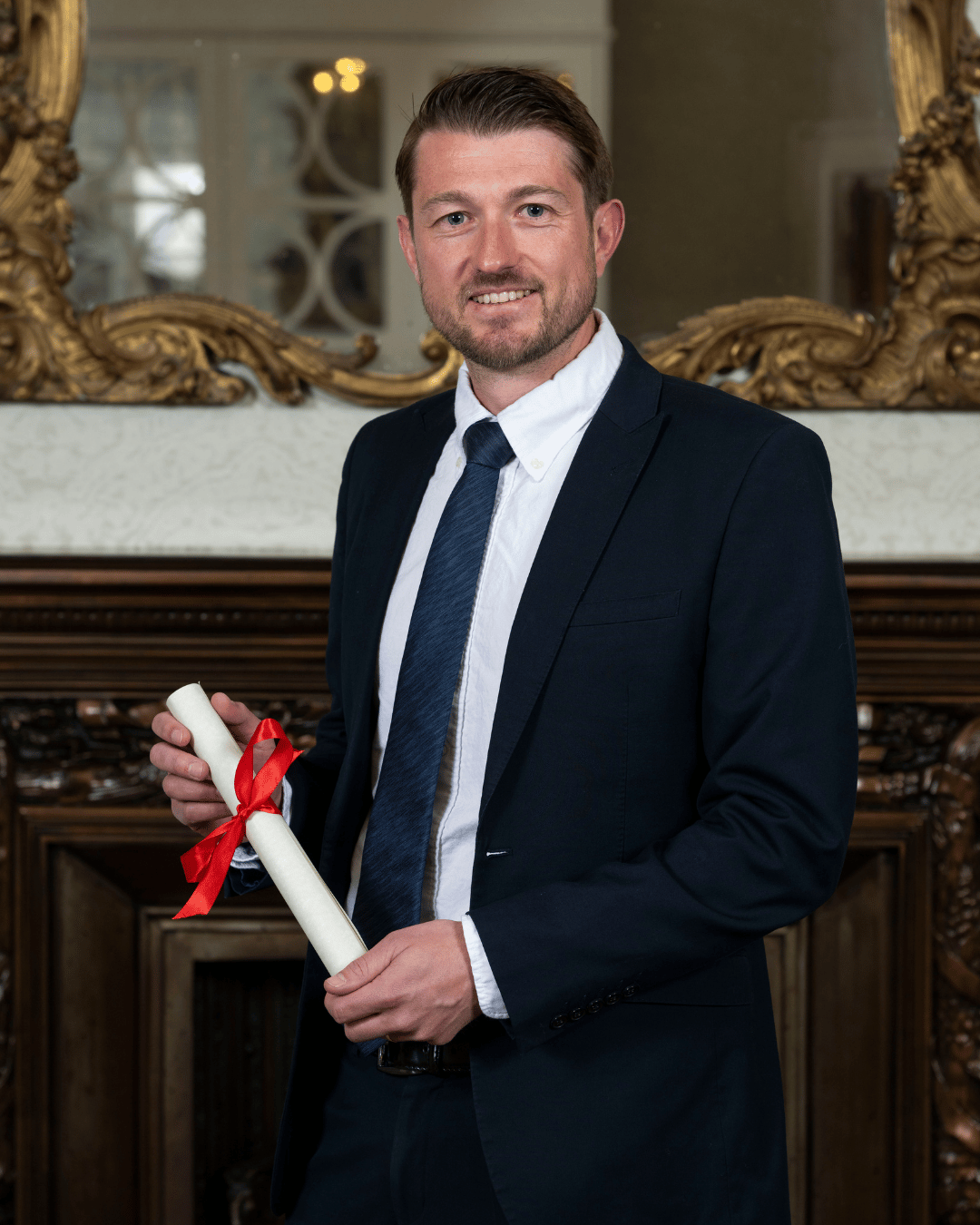
Larking Gowen expands insolvency strength with latest professional accreditation
A Norfolk professional has secured one of the UK’s toughest financial qualifications, for the insolvency team at Larking Gowen. Sebastian Hall, known to colleagues and clients as Baz, has been formally granted his licence as a licensed insolvency practitioner (IP) as of 2 July.
Awarded through the Institute of Chartered Accountants in England and Wales, the qualification is widely recognised as one of the most demanding in the financial profession. With relatively few candidates sitting the exams each year and pass rates often below 50 per cent, it represents a significant and highly respected achievement.
Sebastian’s success follows nearly two decades of hands on experience in insolvency, having built his career from the ground up within the profession. He said: “Achieving my licence as an insolvency practitioner represents years of hard work, experience and commitment. It is about far more than passing an exam. It is about developing the judgement and responsibility needed to support businesses and individuals at some of the most difficult points in their journey.”
Unlike many accountancy qualifications that are completed early in a career, insolvency practitioners typically undertake their exams only after extensive practical experience. Candidates must demonstrate significant casework alongside rigorous academic assessment, making the pathway both demanding and highly selective. To put it into perspective there are only approximately 1,500 licensed IP’s in the UK, in comparison to over 275,000 qualified chartered and certified accountants across the UK and the Republic of Ireland.
For Sebastian, balancing study alongside a senior professional role and family life presented one of the greatest challenges. “It required real discipline,” he said. “With a demanding role and a young family at home, it meant studying most evenings for many months.”
His newly awarded licence comes at a time when demand for insolvency expertise is rising. Following a period of reduced activity during the pandemic, the sector is now seeing increasing numbers of businesses facing financial pressure, particularly owner managed companies dealing with higher costs and ongoing economic uncertainty.
Sebastian believes that early engagement is critical in achieving the best outcomes for businesses: “One of the key challenges is that many directors wait too long before seeking advice,” he said. “In reality, the earlier a conversation takes place, the more options are available. Our role is to provide clarity and reassurance so that business owners can make informed decisions at the right time.”
As a licensed insolvency practitioner, Sebastian is now able to take formal appointments in his own name, a responsibility that reflects both professional expertise and public trust. These appointments place practitioners at the centre of complex situations, overseeing processes that must balance fairness, transparency and accountability.
At Larking Gowen, his qualification increases the number of licensed insolvency practitioners within the firm to three. This strengthens the firm’s capacity to support clients across the region while ensuring continuity and resilience within the team as it continues to grow.
Lee Green, Partner in the Insolvency and Recovery team at Larking Gowen, said: “Sebastian achieving his licence is a proud moment for the firm and a reflection of his dedication, professionalism and depth of experience. This qualification is widely recognised for both its technical rigour and the responsibility it carries.”
Sebastian’s passionate about improving understanding of insolvency and the role it plays within the business landscape. “There can be a misconception that insolvency is simply about closing businesses down and making a return to creditors where possible” he said. “In reality, we have a duty to investigate the circumstances that led to a company’s financial difficulties and to report on our findings. Where any misconduct or inappropriate behaviour is identified, we are required to ensure this is properly addressed through the appropriate channels. Without the insolvency system in place there would be chaos with directors deciding who should be prioritised and no accountability for any misconduct.”
He added: “In reality, it is about creating structure, ensuring fairness and helping people navigate difficult situations in the right way. If more businesses felt able to seek advice earlier, it could make a significant difference to outcomes.”
Share this page


Newsletter
Sign up to receive the latest news from Larking Gowen